

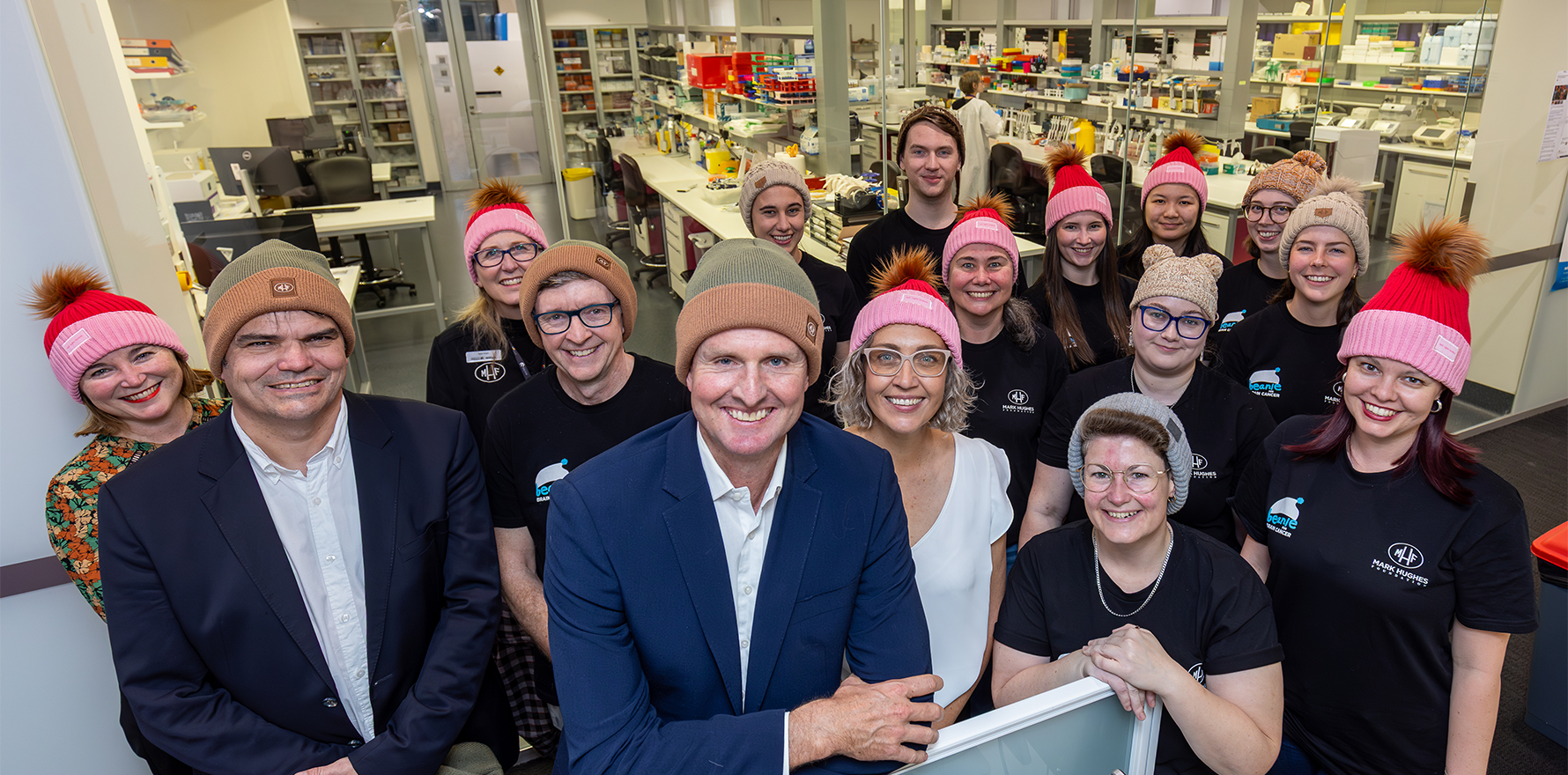
The Mark Hughes Foundation has committed $18.9 million to accelerate translational research and improve patient outcomes.
A landmark $18.9 million commitment from the Mark Hughes Foundation will accelerate Australia’s efforts to improve outcomes for people with brain cancer.
The investment will fund the next phase of research at the University of Newcastle’s MHF Centre for Brain Cancer Research and lifts the foundation’s total contribution to more than $36 million.
This makes it one of the largest philanthropic investments in brain cancer research nationally and the largest philanthropic gift in the University of Newcastle’s history.
The funding will support a new phase of activity focused on translating laboratory discoveries into clinical practice, at a time when brain cancer remains the leading cause of cancer death in children and adults under 40 and survival outcomes have changed little over recent decades.
Since its establishment, the MHF Centre for Brain Cancer Research has expanded rapidly, building a nationally connected network of researchers, clinicians, and partners focused on tackling the disease through collaboration rather than isolated research efforts.
Clinician scientist and MHF Centre director Professor Mike Fay said the partnership between the University of Newcastle and the Mark Hughes Foundation had enabled fragmented brain cancer research efforts to evolve into a coordinated national research ecosystem.
Researchers, clinicians, and partners across Australia, and globally, are tackling brain cancer collaboratively, focused on improving outcomes for patients and their families.
“In just a few years, we’ve built a strong foundation and emerged as a unifying force – bringing together expertise from across the nation to drive innovation, impact for patients, and lasting change,” he said.
“The first phase of the MHF Centre focused on building the infrastructure – investing in people, equipment and partnerships.
“Today, we have the expertise, technology, and strong relationships with the nation’s leading researchers in brain cancer research. By working as one team, we’re achieving far greater impact than any of us could alone.”
The centre has grown to include more than 160 members nationally and is supported by a network of 40 collaborating medical research institutes, hospitals, and universities.
More than 70 researchers are based at the centre in Newcastle, alongside 20 clinician scientists, while almost 70% of Newcastle-based researchers are early-career investigators including honours and PhD students, research assistants, and postdoctoral researchers.
The centre has also developed access to nationally significant research resources, including the WEHI BRAIN Registry containing comprehensive data from more than 10,500 patients, a decade-long Brain Cancer Biobank housed at HMRI, and a blood-based biomarker platform in Queensland co-funded by the MHF and the National Health and Medical Research Council.
Three brain cancer symposiums have been hosted in Newcastle and Melbourne in collaboration with The Brain Cancer Centre, while five MHF Brain Cancer Coordinators now support patients and research activity across 14 locations.
A former rugby league footballer for the Newcastle Knights Mark Hughes, OAM, established the Foundation with his wife Kirralee after being diagnosed with brain cancer in 2013.
Since then, the organisation has become one of Australia’s most recognisable brain cancer charities, raising funds for research, patient support, and awareness initiatives. Its Beanie for Brain Cancer Campaign alone has seen more than one million beanies sold.
Mr Hughes said the latest commitment reflected the collective contribution of supporters who had backed the Foundation over many years.
“This commitment is a proud moment for everyone who has supported the Mark Hughes Foundation over the years. What started as a conversation around a hospital bed after my diagnosis has grown into a community movement that is helping change the future of brain cancer research in Australia,” he said.
Related



“Every beanie sold, every donation made, every event attended and every person who has stood with us has contributed to this moment. Together, our community has helped create one of the largest philanthropic investments in brain cancer research in this country.
“This $18.9 million commitment isn’t just about funding research – it’s about giving hope to every family, including mine, that is facing a brain cancer diagnosis. It is ensuring we continue pushing towards our ultimate goal of finding better treatments and, one day, a cure.”
Professor Fay said the next five years would focus on ensuring discoveries made through the Centre’s research programs translate more quickly into improved patient care.
“We have more than 160 members of the MHF Centre nationwide and are now forging strong international research collaborations.
“We are working to leverage our strengths in imaging, drug repurposing and theranostics to guide national efforts and ensure no brain cancer patient is left behind. We are also continuing to lead the conversation with government and industry, championing a ‘Team Australia’ approach to solving one of the most challenging cancer problems of our time.
“This next phase is about turning our momentum into real-world change — including new approaches to treatments and accelerating drug development.”
University of Newcastle Vice-Chancellor Professor Alex Zelinsky AO said the Foundation’s support had helped establish critical national infrastructure that would underpin future advances.
“The establishment of the MHF Centre has been a gamechanger,” Professor Zelinsky said.
“Thanks to the MHF Centre, we now have access to national registries, the MHF Brain biobank, advanced imaging and biomarker platforms, and a network of researchers working together across the country.
“These foundations have positioned us to move with speed and purpose, translating research from the lab into patient care and delivering outcomes that matter.
“The next five years represent a unique opportunity to accelerate progress and bring together everything we’ve built to make a tangible impact on the lives of brain cancer patients, today and into the future.
“We are privileged to partner with the Mark Hughes Foundation, and it really shows what incredible progress, and impact can be reached when we work together.
“I am in awe of the incredible work of the MHF, particularly the efforts of Mark Hughes and his wife Kirralee.”
