

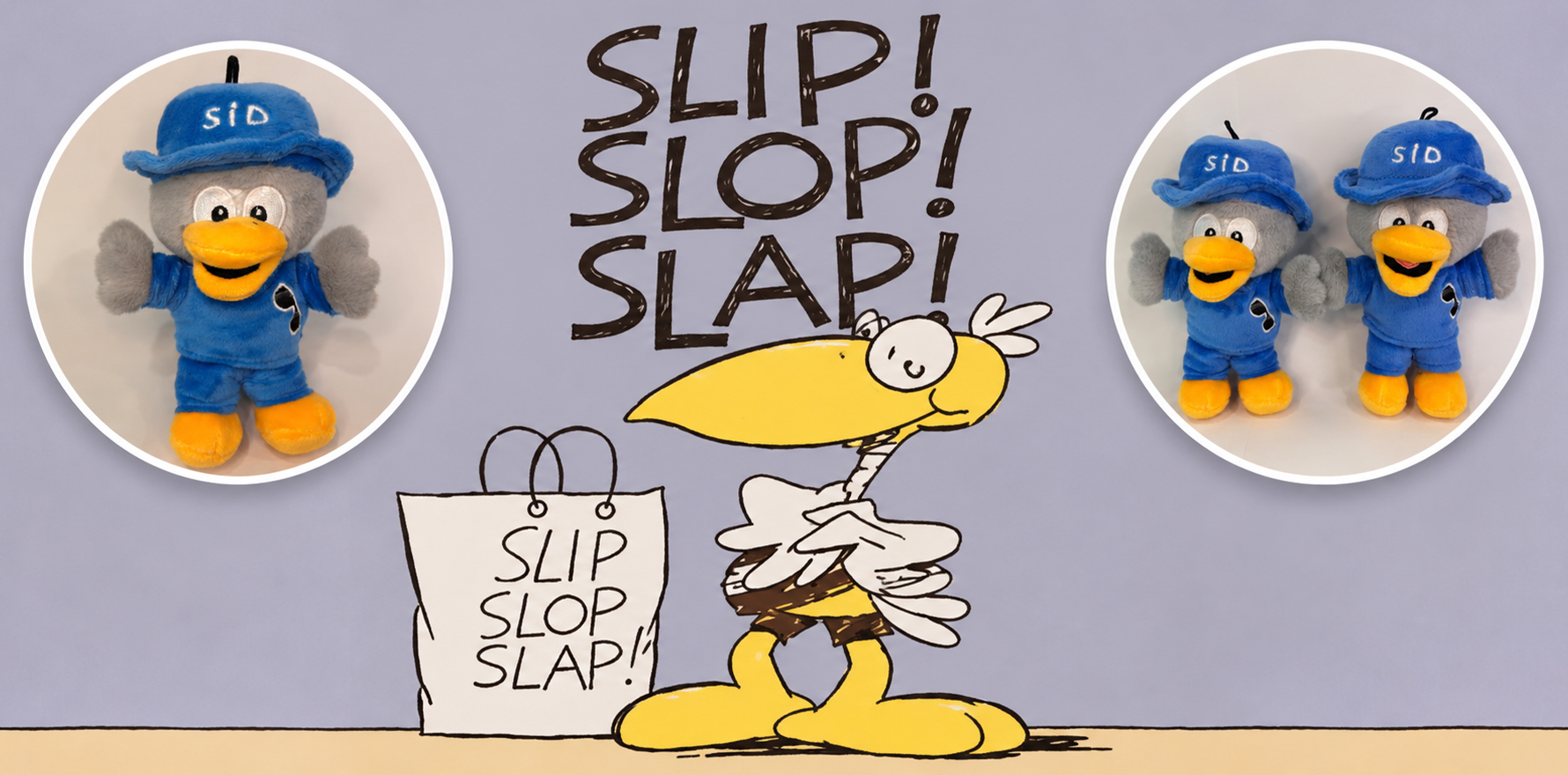
Forty-five years after teaching Aussies to Slip! Slop! Slap!, the country’s favourite sun-smart seagull is coming out of retirement. And new research suggests he still has plenty of work to do.
He’s 45, still rocking the budgie smugglers and apparently has no intention of flying off into the sunset.
Sid the Seagull, the feathered star of one of Australia’s most successful public health campaigns, is making a comeback to celebrate 45 years of Slip! Slop! Slap! – and this time he’s bringing the next generation along for the ride.
Cancer Council Australia has dusted off its iconic mascot for National Skin Cancer Action Week, introducing Little Sid Seagull to help spread the sun safety message to a generation more familiar with TikTok influencers than catchy television jingles.
And if the latest research is anything to go by, Sid and his sidekick might have their work cut out for them.
New YouGov polling has revealed some alarming holes in Australians’ sun protection habits, with nearly half (48%) admitting they have only basic or limited knowledge of the UV Index.
Gen Z, despite being the most likely generation to have stepped up its sun protection game over the past year (55%), is also the most susceptible to the lure of a golden tan.
More than one in four (27%) said influencer tanning content made them want a tan, while 26% felt pressure from friends, family or social media to sport a bronzed look during the warmer months.
Millennials, meanwhile, might be keen to do their own research, with 38% seeking scientific evidence when checking sunscreen information online, but fewer than half (49%) have an adequate or strong understanding of the UV Index.
And Baby Boomers, who were around for Sid’s original television debut in 1981, aren’t necessarily practising what he preached. Among sunscreen users, 17% reported not using it at all in the previous eight months, compared with just 5% of Gen Z.
It seems knowing the jingle and following the advice are two very different things.
Cancer Council Australia CEO Jacinta Reddan said the findings showed every generation had its own sun safety blind spot.
“While Australians are broadly aware of their skin cancer risk, many still have knowledge gaps that could increase their exposure to harmful UV radiation,” she said.
“For 45 years, Sid Seagull has helped Australians remember how to protect themselves from the sun. While we’ve made progress, the job’s not done.”
There is, however, good reason to believe the old bird still has pulling power.
Separate YouGov polling found four in five Australians agreed Sid had nostalgic appeal and could help educate new generations about sun safety, while 64% said campaigns featuring characters like Sid made them more likely to use sun protection.
And the original campaign has an impressive legacy.
Since Sid first flapped onto television screens in 1981, melanoma rates among Australian men and women under 40 have declined, reflecting decades of prevention efforts.
But the bigger picture remains sobering.
Two in three Australians will be diagnosed with some form of skin cancer during their lifetime, and around 2000 Australians die from skin cancer every year. Non-melanoma skin cancers are diagnosed more frequently than all other cancers combined.
Australasian College of Dermatologists president Dr Adrian Lim said the consequences of sun exposure could take decades to emerge.
“The skin cancers dermatologists diagnose today are often the result of sun exposure from decades ago,” he said.
“So, while it’s encouraging to hear that younger people are using sun protection, there is a worrying trend reemerging around tanning.
“There’s no such thing as a safe tan. A tan is your skin’s response to UV damage, not a sign of health.”
And while Sid’s original three-step routine was revolutionary in its simplicity, the advice has since expanded to five steps, adding Seek shade and Slide on sunglasses to the familiar Slip on protective clothing, Slop on sunscreen and Slap on a hat.
The sunscreen recommendation has also moved with the times, with Australians now urged to use broad-spectrum, water-resistant SPF50 or SPF50+ products whenever the UV Index reaches three or above.
Related

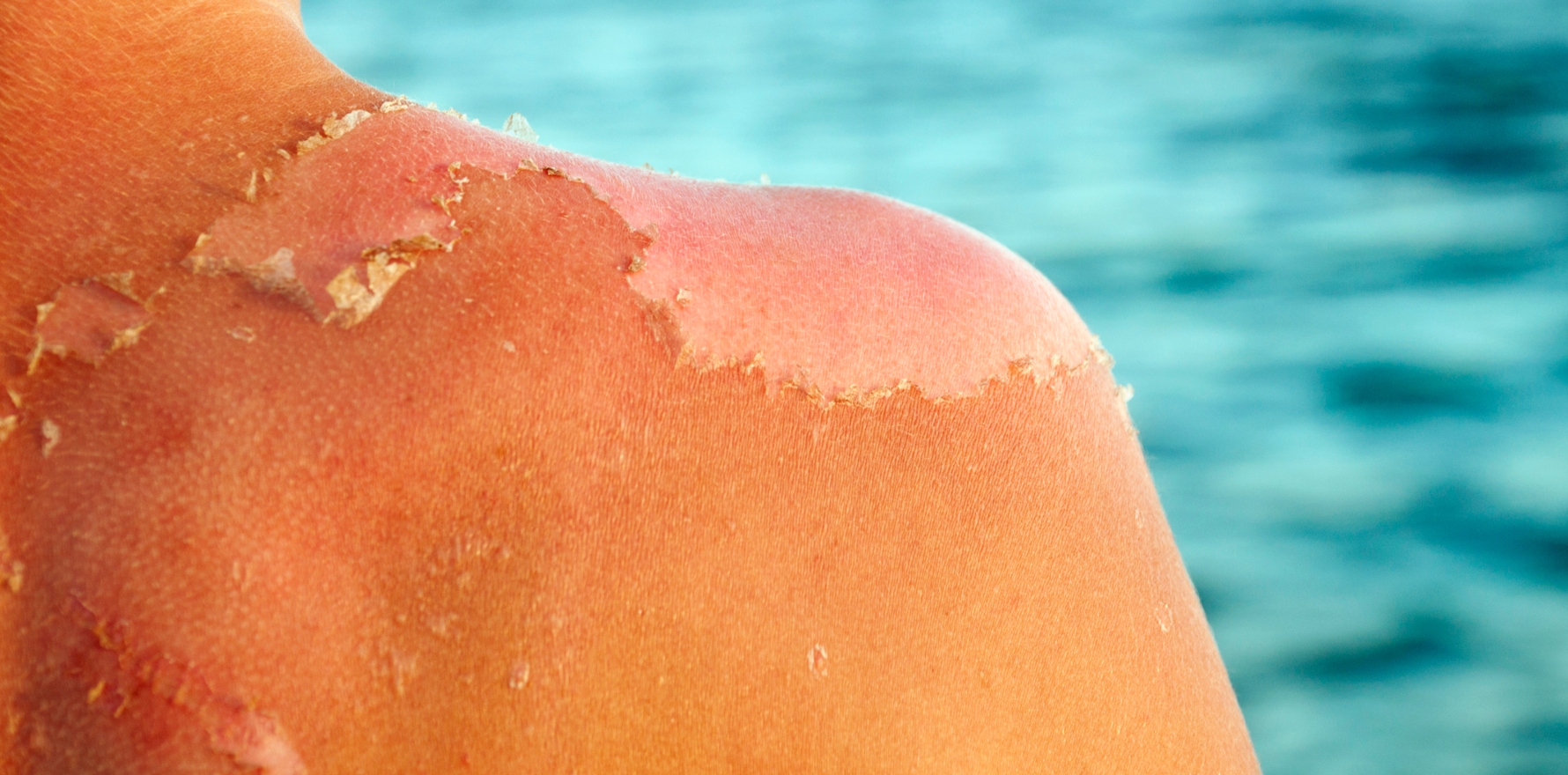

Cancer Council says getting children into good habits early is particularly important, citing research suggesting half of lifetime UV exposure occurs before the age of 20.
And parents may be the most powerful influencers of all.
Studies cited by Cancer Council found children were 12 times more likely to use sunscreen and three times more likely to wear a hat when they saw their parents doing the same.
Ms Reddan said the campaign’s 2026 theme, Sun safe habits last a lifetime, was designed to encourage families to pass those behaviours down through generations.
“Australians of every age can benefit from regular reminders to protect their skin. Sun safe habits last a lifetime, and after 45 years of Sid Seagull, we want every generation to keep passing them on,” she said.
Cancer Council is also hoping a little nostalgia will help, with limited-edition 10cm Little Sid Seagull plush toys up for grabs through giveaways throughout November.
It’s a fitting birthday present for a character who managed to make sun protection advice stick in the national consciousness long before social media, smartphones or the phrase ‘public health influencer’ existed.
And with Sid proving there’s life in the old public health mascots yet, perhaps it’s time Norm from ‘Life. Be in it.’ fame hauled himself off the couch and staged a comeback too.
Between them, they could have Australia slipping, slopping, slapping, seeking, sliding and getting off its backside in no time.
