

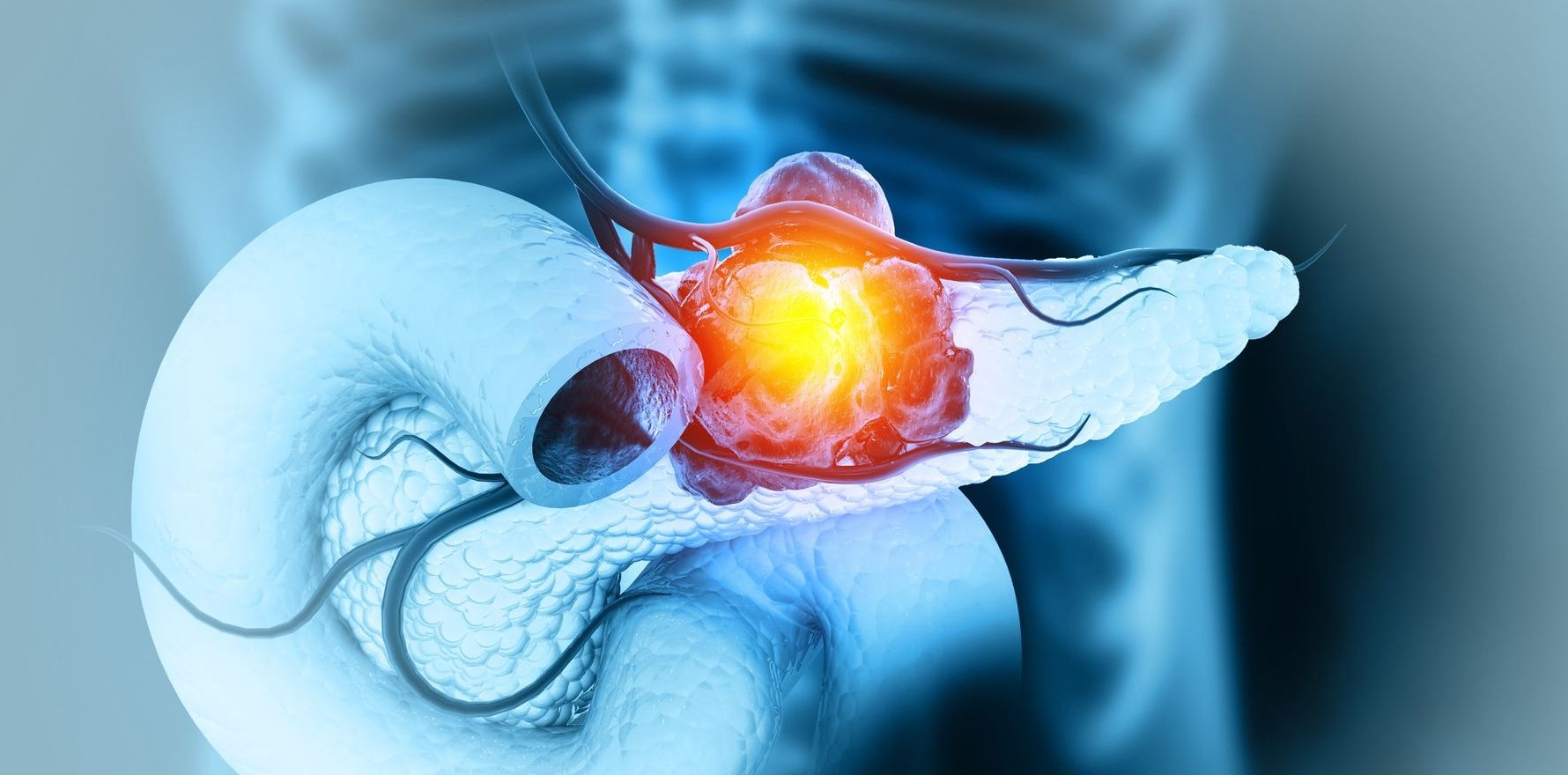
American researchers have developed an AI framework that outperforms radiologists at detecting visually occult pancreatic ductal adenocarcinoma.
The challenge of hard-to-detect cancers calls for more advanced technological applications.
Pancreatic ductal adenocarcinoma (PDA) is one of the deadliest cancers, as more than 85% of cases are diagnosed when the cancer is unresectable. In addition, there is no accepted strategy for the early detection of PDA in sporadic cases – making the development of a clinically robust tool for early PDA detection a highly sought-after product.
In one attempt to develop such a tool, a team of American researchers have developed the Radiomics-based Early Detection MODel (REDMOD) framework, an AI tool that was designed to specifically overcome the known challenges in using AI to accurately detect PDA. One such challenge is the presence of occult cancers, which show no obvious signs of masses even after expert review.
“This study validates REDMOD as a fully automated AI framework that can identify the imaging signature of stage 0 PDA from routine CT scans with substantial lead times and performance superior to expert radiologists,” wrote the researchers behind the recent study, published in Gut.
“The demonstrated ability of the framework to consistently detect these occult signals on a large clinically oriented dataset, combined with its high longitudinal stability and validated specificity, establishes a robust foundation for AI-augmented early detection.”
Researchers identified 219 patients (median age 69 years, male to female ratio 1.3) with CT scans obtained in the three to 36 months before patients were diagnosed with PDA.
These scans did not display any focal pancreatic masses or have any other imaging features suggestive of PDA at the time they were taken; observations that were confirmed by re-review for the purposes of this research.
A further 1243 CT scans (negative for focal pancreatic masses or suspicious lesions, again confirmed by independent radiologist review) were also taken for use as the control group.
The patients in the control group had a median age of 64 years, with a male to female ratio of 1.4. In addition to these scans being required to have no evidence of PDA at the time of the scan, the individuals they were taken from were also required to remain PDA free for at least three years after the date of the scan.
The 1462 CT scans were divided into two groups to train and then test the AI tool. The training set consisted of 969 scans (156 pre-diagnostic scans) while the remaining 493 scans (63 pre-diagnostic) were used for the testing set.
REDMOD was successfully able to segment the pancreas on the CT scans, something that traditionally has been a time-consuming manual process that introduces variability between individuals reading the scan.
AI-driven segmentation resulted in smaller pancreatic volumes for the pre-diagnostic group in both the training (average 68.0ml versus 74.7ml) and test (67.1ml versus 72.9ml) subsets, although the latter comparison was not statistically significant.
Once the AI tool was trained, REDMOD achieved an area under the curve (AUC) of 0.82 (95% confidence interval 0.81-0.83) for detecting stage 0 PDA in the test subset. It identified correctly identified 46 of the 63 pre-diagnostic scans for a sensitivity of 73.0% (60.0%-78.7%) and 349 of the 430 control scans for a specificity of 81.1% (75.2%-93.1%). Accuracy was 80.1 (75.3%-88.6%).
The ability to correctly detect stage 0 PDA remained high when the pre-diagnostic scans were analysed separately based on the time that had elapsed between the scan and the formal diagnosis.
The sensitivity was 75.0% for scans taken three to 12 months before diagnosis as well as 12 to 24 months before diagnosis, and 68.4% for scans taken more than two years before diagnosis.
REDMOD outperformed two expert radiologists on several of the metrics, with the humans achieving an AUC of 0.69 when they reviewed the test set of scans. The radiologists had lower overall sensitivity 38.9% (30.2%-47.5%), as well as at each pre-diagnostic interval (50.0% for scans between three and 12 months, 41.0% for scans between 12 and 24 months, and 23.0% for scans beyond 24 months).
“This balanced performance, particularly a nearly threefold higher sensitivity (68.0% vs 23.0%) at the longest lead times (>24 months), suggests that the primary strength of REDMOD lies in its capacity to identify the earliest imaging signatures of visually occult disease,” the researchers wrote.
Related



The researchers noted that using REDMOD in a clinical setting could introduce automation bias – where users accept the AI tool predictions without second guessing it – especially in patients where there are no visible signs that a tumour is present. However, they already have plans to address this potential limitation.
“Our upcoming prospective AI-PACED (Artificial Intelligence for Pancreatic Cancer Early Detection) trial will quantify automation bias and establish optimal override criteria so that algorithmic alerts prompt appropriate risk-stratified evaluation rather than premature intervention,” they wrote.
“This work overcomes key barriers in the field by providing a scalable objective tool that addresses a critical diagnostic gap.
“While prospective validation is paramount to confirm clinical utility, the REDMOD framework represents a significant advance towards shifting the paradigm for sporadic PDA from a late-stage symptomatic diagnosis to proactive pre-clinical interception, offering tangible hope for improving outcomes in this challenging disease.”
